
- Two Ashland students have been part of the Chester Scholars research program at Metro Health hospital in Cleveland. Applications for this fantastic program are due February 15th.
- The University of Cincinnati ROSE program is a unique summer internship program that also includes an early acceptance to UC's medical school. It is open to sophomore and junior residents of Ohio. Application due February 1st.
- The Upper Delaware National Park is looking for summer park ranger interns. Applications are considered on a continual basis, but positions are typically filled by mid-March.
- The Amgen scholars program provides summer research opportunities across the country. Applications are due February 1st.
- If you are looking to take a great summer field course, check out this marine biology program in the Gulf of Mexico.
Monday, January 21, 2013
More summer internship opportunities
We have received notices on a few more summer research internships. It is not too late to put together applications and line up letters of recommendation from faculty, but you should start soon. You can find other opportunities on this blog using the tag "Summer Research Internships".


Thursday, January 10, 2013
Research internships at the Cleveland Museum of Natural History
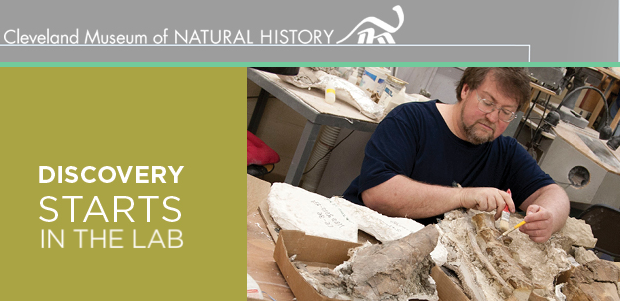
The Kirtlandia Research Internship Program at the Cleveland Museum of Natural History provides undergraduate students the opportunity to work for eight weeks with a museum curator. You can read about opportunities in many areas ranging from archaeology and botany to paleontology, invertebrate biology and wildlife resource management.
Projects last eight weeks, pay $7.70 per hour and typically involve both field and laboratory work. The online application can be found here and is due in early March.

Projects last eight weeks, pay $7.70 per hour and typically involve both field and laboratory work. The online application can be found here and is due in early March.
Tuesday, January 8, 2013
Six-month internship opportunity at Ohio Bird Sanctuary
 |
| a barn owl (Tyto alba) at OBS (photo: mbenfield.blogspot.com) |
A flyer with more details is posted on the 3rd-floor, Kettering. Interested students may also contact Patty Saunders or Merrill Tawse for a copy of the flyer with additional details. Contact the Ohio Bird Sanctuary for an application (419-884-HAWK or ohiobirdsanctuary@gmail.com).
Thursday, December 13, 2012
Q&A with Melissa Beck, Associate Director of Neurosciences and Head of Juvenile Toxicology at WIL Research
 |
| Dr. Melissa Beck |
At
Ashland, I had the opportunity to work on equipment and projects that many
other undergraduate students at small private universities don’t get. In
fact, many undergraduate students at large universities don’t get these same
opportunities either. I worked on a study using live animals that was
eventually published, and we did everything from caring for the rats, dosing
them, testing them in a functional observational battery and collecting tissues
for analysis. In chemistry, I had the opportunity to work with a lot of
equipment most of my colleagues only read about during their undergraduate
experience. I consider myself very fortunate for the opportunities
afforded to me at Ashland.
Currently, I am the Associate Director of Neurosciences and Head of Juvenile Toxicology at WIL Research in Ashland. WIL Research is a Contract Research Organization that performs safety assessment studies for drugs and chemicals. The studies we perform help to ensure the safety of these drugs before they are given to humans. I don’t do a lot of bench work now, but I participate in the design of these studies and am involved in data interpretation and reporting the study results. I find this very fulfilling as I see the drugs I have worked with reaching the market and being used by adults and children. I have also been able to participate in the development of guidances used by regulatory agencies to establish the safety of drugs and chemicals, and I have been able to co-author 3 book chapters on safety assessment for pediatric drugs.
What role did your education at AU play in your seeking out your current occupation?
At Ashland, I studied Toxicology, a program that is only offered at a handful of undergraduate institutions. While in this program, I had the opportunity to work with live animals on an independent research study. I learned that I have a love for research, which prompted me to earn a PhD in Toxicology from the University of Michigan. After that, I joined WIL Research, which gives me the opportunity to put my education in Toxicology to use daily.
What advice do you have for current AU science majors?
I
think it is very easy for an undergraduate science major to believe
that the only opportunities for them are to be a doctor or science
teacher. Both of these occupations are very worthy, but they
are just a drop in the bucket as to what you can do with a science
education. When I started at Ashland, I was in the Biology program and
assumed I would end up becoming a doctor. A friend encouraged me to
take a Toxicology elective with her and the rest
is history. So, I would encourage current AU science majors to take
electives and look outside the box for potential careers.
What career advice can you give to future graduates of the AU science program?
There are many different things one can do with a degree in science. I would suggest that they speak with their advisors and ask them for advice. Also, look through the list of graduates and contact them to see what they are doing. Get involved in an internship or shadow someone in a field you might have interest in. Look through the research interests of faculty at grad schools you may want to attend. If you have an interest, there is likely a way to apply your degree to that interest and there is probably someone who can assist you in reaching your goal.
Wednesday, December 12, 2012
Ashland Toxicology and Environmental Science major receives national grant

“This species thrives in warm weather and is invading ditches, pastures and lawns,” Trimble said. “They are spreading more every year and, with that, there is increased potential for them to be harvested with hay or mixed with compost.” “Cassie is growing these plants in the greenhouse and developing new ways to extract and analyze the toxins they contain.”
Trimble said this research will help determine how concerned farmers and homeowners should be with these invasive poisonous plants. “She is taking samples from dried and composted material and analyzing them to see how much of the toxin remains,” he said. Cassie has presented her current findings at an Ohio Valley Chapter meeting of the Society for Environmental Toxicology and Chemistry at Miami University in Oxford and was recently selected to receive a national scholarship from the American Chemistry Society.
Friday, December 7, 2012
Get paid to conduct research this summer

Most summer research programs have application deadlines in February. That makes the holiday break a good time to complete and submit applications before the spring semester begins. You will typically need one or two letters of recommendation, so talk with professors to line those up before the holiday break. Check back with this blog for updates and check out the listing of National Science Foundation funded programs across the country. Another place to search for opportunities is on the Ohio Means Internships webpage, or by using the "summer research internships" tag on this site.
And as always, talk to your faculty advisor if you need help or have questions.
Some recent opportunities we have heard about:
- National Nanotechnology Infrastructure Network undergraduate research program
- Harvard Forest summer research program
- University of Nebraska-Lincoln summer research program
- University of Cincinatti summer surgery and neuroscience experiential programs
- Stone Laboratories on Lake Erie
- Collegiate Leaders in Environmental Health at the CDC
- Department of Energy scholars program
- Micky Leland Energy Fellowship
- US Department of Homeland Security (DHS) HS-STEM summer internships
Monday, November 26, 2012
Ashland biology senior conducts summer research at UC-Berkeley
 Lindsey Knapp spent this past summer in California conducting research at UC Berkeley as part of a National Science Foundation funded research program. Many of our students gain valuable experience in these REU programs, which typically accept applications starting in January or February of each year. You can search these programs and learn more about applying here. Lindsey wrote the following about her experience and provides some tips for a successful application:
My summer Research Experience for Undergraduates (REU) at University of California-Berkeley was a great experience that provided me with professional development skills, gave me a preview of my future career, and allowed me to network with a variety of biology students and professionals. I worked in David Weisblat’s Lab in the Molecular and Cellular Biology Department funded by a National Science Foundation (NSF) grant. My project focused on the gene piezo and its role in development and mechanotransduction in the leech Helobdella.
I found this REU on the NSF website along with other NSF funded programs. After applying to many programs, I was accepted into four great programs and chose Berkeley. I was in the Berkeley REU program with 10 other students from around the country and the world. My responsibilities were the same as a graduate student. I was given a project and a mentor who was familiar with the project and techniques needed to pursue it. I implemented experiments independently throughout the summer. At the end of the summer my cohort and I gave presentations on our projects including an introduction to the topic of research, the experiments we ran, and our results
Throughout the summer there were a variety of professional development workshops on several topics including graduate school applications, science careers, scientific ethics, and public speaking. We also got to meet, interact with, and attend lectures from amazing scientists such as Tyrone Hayes, a world expert on fertilizers’ affect on the endocrine system, and Robert Full, a biophysicist who helped make movies such as “A Bug’s Life” and “Kung Fu Panda”. In addition, we were able to learn about hyenas at the Berkeley field station and go whale watching in the Pacific Ocean.
This REU prepared me immensely for my future education and career. I am going to pursue a Ph.D. in Developmental Biology and go on to work in an industry or government lab. The experience of implementing my own experiments and troubleshooting for my own research project is invaluable. In graduate school I will essentially be working on a project of the same caliber, but with more freedom and independence. The skills I learned this summer will help me succeed in graduate school. Success in graduate school will ultimately help me procure a research focused job.
During the application process, I would suggest that science majors apply for many different programs. There are hundreds to thousands of qualified applicants applying for each program. Make your application stand out by writing essays with personality and get good letters of recommendation from professors or professionals you have worked with. Be thorough but precise in your application, and do your best.
 |
| Lindsey presenting her summer research |
Subscribe to:
Posts (Atom)

